
Too Young to Scroll: Why Social Media Needs a Minimum Age Law

Introduction: Why a Minimum Age Law for Social Media in India Is Urgently Needed:
The absence of a minimum age law for social media in India has created a serious legal and constitutional gap in the protection of children online. As social media platforms increasingly shape how children learn, interact, and perceive their identities, the risks associated with unrestricted digital exposure have become impossible to ignore. Following Australia’s recent ban on social media access for children under 16, India stands at a critical crossroads. The issue is no longer whether social media harms minors, but whether the State can continue to avoid its duty to protect them.
Across legal systems, one principle remains consistent: governments must intervene to protect children from foreseeable harm. Allowing private technology companies to determine when and how children enter powerful digital spaces raises significant legal and ethical concerns. The lack of a statutory minimum age for social media in India reflects not a lack of legal authority, but a lack of legislative urgency.

Does the State Have a Legal Duty to Protect Children Online on Social Media?
International and national legal frameworks provide little room for ambiguity. The United Nations Convention on the Rights of the Child (UNCRC), to which India is a signatory, mandates nations to establish laws and policies that protect children from exploitation, harmful influences, and dangerous environments. In the 21st century, the online environment is definitely one such area.
This responsibility is not just symbolic. It leads to a concrete obligation to monitor places where children face systemic threats. Just like child labor laws, age-of-consent regulations, and education mandates safeguard minors in the real world, corresponding protections are necessary in online spaces. Since the law recognizes that minors lack the complete capacity to assess long-term outcomes, permitting unrestricted access to social media becomes legally inconsistent.
Shifting age verification and safety regulation to private platforms undermines this responsibility. The government cannot assign child protection to entities primarily driven by profit. Failing to take action may represent not only policy standstill but also an infringement of the state's acknowledged responsibility to ensure care.
What Can India Learn from Global Digital Child-Safety Laws?
Comparative legal advancements show that controlling children's online access is both possible and legal. In the United States, the Children’s Online Privacy Protection Act (COPPA) enforces stringent requirements on platforms gathering information from children under 13, mandating verifiable parental consent and restricting data usage. Importantly, COPPA regards online platforms as entities of legal regulation, overseen by the Federal Trade Commission.
Europe has advanced further. Article 8 of the GDPR sets a default digital consent age at 16 (allowing flexibility down to 13), acknowledging the need for enhanced protection of children’s data. The Digital Services Act (DSA) forbids targeted ads aimed at minors and requires platforms to evaluate and reduce systemic risks. Likewise, the UK's Online Safety Act, 2023 establishes a legal responsibility for care, requiring age-verification technologies and content designed for suitable age audiences.
Australia's recent decision to prohibit social media access for children under 16 highlights a rising global agreement: safeguarding children in digital environments necessitates enforceable laws rather than optional adherence. These frameworks collectively demonstrate that protecting minors can coexist with freedom of expression, creativity, and proportionality.
Is Regulation Compatible with Free Speech and Constitutional Rights?
Critics of regulation frequently express constitutional worries, especially freedom of speech. Judicial precedent indicates that digital regulation for child protection is constitutionally acceptable when specifically focused.
In United States v. American Library Association (2003), the U.S. Supreme Court affirmed the necessity of internet filters in public libraries to protect minors from inappropriate material. Although Brown v. Entertainment Merchants Association (2011) invalidated a poorly supported law regarding violent video games, it did not ban all forms of regulation. Rather, it reiterated that measures focused on safeguarding minors, which are evidence-based and proportionate, could be legitimate.
The legal question, then, is not if the state can impose regulations, but if it does so with caution. A law establishing a minimum age that is backed by research, defined standards, and procedural protections would probably endure constitutional examination.
Why Self-Regulation by Platforms Is Not Enough:
Present social media management depends significantly on self-regulation. Platforms establish their own age restrictions, rely on self-reported birth dates, and apply rules inconsistently. These systems can be easily circumvented and are devoid of transparency.
Even more significantly, platform rewards frequently clash with the well-being of children. Algorithms aimed at enhancing engagement can expose minors to harmful content, online manipulation, or psychologically detrimental material. In the absence of enforceable legal obligations, accountability becomes fragmented. When damage happens, families are left without suitable solutions, and accountability becomes unclear.
Self-regulation, in this instance, is not regulation; it is relinquishment.
The Case for Immediate Legislative Action in India on social media:
Growing evidence connects unregulated social media exposure to anxiety, depression, sleep disturbances, body-image concerns, and online exploitation in minors. Although laws cannot eradicate every risk, they can greatly reduce harm by postponing access, requiring safety-by-design approaches, limiting targeted ads, and implementing clear supervision.
A Minimum Age Law for social media, along with strong age-verification protocols and regulatory oversight, would bring India’s digital governance in line with its constitutional and international responsibilities. Safeguarding children on the internet is not a limitation of liberty, it is a confirmation of shared duty.
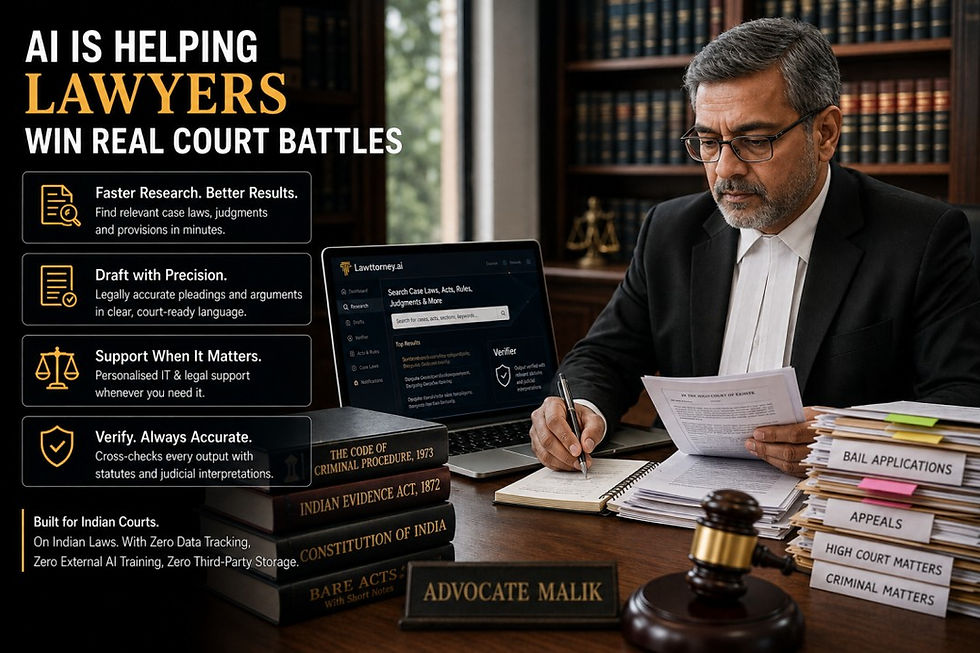
Lawttorney.ai’s Perspective on Digital Child Protection
At Lawttorney.ai, we consider the regulation of social media for youth to be a pivotal legal issue of the digital era—particularly in the absence of a minimum age law for social media in India. The law must evolve alongside technology, guided by constitutional values and child-centric protections.
AI-driven legal research reveals a clear global shift: jurisdictions are moving away from reactive supervision toward active safeguarding of children in digital spaces. As countries adopt enforceable frameworks to regulate social media access for minors, India cannot afford to lag behind. http://Lawttorney.ai
Stay Ahead in Legal Practice with Lawttorney.ai
Whether you are a lawyer, paralegal, or law student, Lawttorney.ai empowers you to work smarter and faster by helping you:
Save time on legal research
Avoid errors in drafting and compliance
Make data-driven, evidence-backed legal decisions
As debates around digital governance and child protection intensify, staying informed and technologically equipped is no longer optional—it is essential.
🎯 Join our exclusive webinar to see Lawttorney.ai in action and discover how AI can transform the way you research, draft, and analyze the law.
👉 Reserve your spot now


Comments