
SUPREME COURT INTRODUCES AI FOR CASE LISTING AND BENCH ALLOCATION

Introduction:
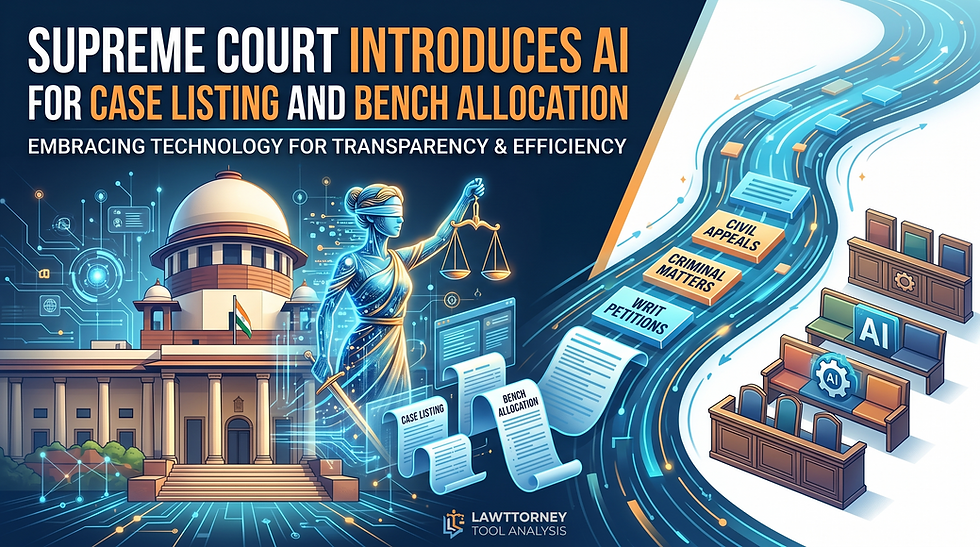
The Supreme Court of India has made a significant move by utilizing Artificial Intelligence (AI) for case listing and bench allocation, thereby eliminating human involvement from this essential administrative task. This reform, announced by Chief Justice of India (CJI) Surya Kant, signifies a significant shift in judicial management and aims to tackle enduring systemic inefficiencies impacting the registry.
Why is AI for Case Listing and Bench Allocation Entering the Supreme Court’s Administrative Process?
The registry of the Supreme Court has faced persistent problems due to prolonged incumbency and outdated technology systems. Officials often remained in their positions for extended periods, leading to irregularities in case allocation. The AI-powered system aims to improve transparency, consistency, and fairness in allocating cases to benches, thereby reducing reliance on the CJI’s discretion as the “master of roster.”
What Triggered the Reform?
The situation arose from a significant error during the hearings led by CJI Surya Kant. A petition challenging the Uttar Pradesh Gangsters and Anti-Social Activities (Prevention) Act, 1986, was filed despite a similar challenge having been dismissed by a three-judge panel in 2022. This duplication exposed major problems in the registry's functioning and prompted the CJI to require a more in-depth administrative inquiry.
How Are Registry Officials Being Reshuffled?
In conjunction with the AI implementation, the Supreme Court registry has undergone unprecedented transfers among departments. This initiative seeks to dismantle entrenched positions and prevent management errors. A second wave of transfers is expected soon, signaling a serious effort to overhaul the system and ensure accountability.
What Does This Mean for the Role of the CJI?
Historically, the CJI has held considerable power as the roster manager, deciding how cases are allocated to different benchesAs AI assumes this role, the pressure of oversight on the CJI’s office will diminish considerably
Will AI Truly Solve the Problem?
Although AI offers the potential for efficiency and fairness, its effectiveness will rely on strong execution and supervision. The system must be regularly assessed to ensure it does not replicate biases or errors. Moreover, the human element of judicial discretion cannot be entirely eliminated AI will serve as a support tool, not as a replacement for judicial insight.
Highlighting Lawttorney Tool Response:

When searched on the Lawttorney tool, the response emphasized that AI integration in judicial administration could significantly reduce human bias, improve efficiency, and enhance transparency. It also cautioned that oversight mechanisms must be in place to prevent algorithmic errors. This aligns closely with the prepared article, which highlights both the promise and the challenges of the reform. Together, the Lawttorney tool’s analysis and the article provide a comprehensive view of how technology is reshaping India’s judiciary.
Wayforward:
The Supreme Court Implements AI for Case Listings and Bench Assignments, signifying a significant milestone in India's judiciary. By combining technological innovations with administrative changes, the Court aims to restore confidence, clarity, and effectiveness in its functions. This reform could serve as a model for other organizations encountering similar challenges, provided that it is implemented thoughtfully and responsibly.
FAQs
What is the purpose of introducing AI in case listing and bench allocation?
The purpose is to eliminate human bias, ensure transparency, and streamline the allocation of cases to different benches.
Will the Chief Justice lose control over the roster?
No, the CJI remains the head of the judiciary, but AI will assist in reducing scrutiny and administrative lapses in roster management.
Can AI completely replace human judgment in judicial administration?
AI can enhance efficiency but cannot replace judicial discretion. Oversight and audits will remain essential.



Comments